The Digital Sabbath: Reclaiming Attention
The question is no longer whether technology is useful. Of course it is.
The question is whether you still choose when to be available - or whether availability has become the default setting of your nervous system.
A digital Sabbath is not a rejection of the modern world. It is a practice of reclaiming attention so that work, love, and quiet can happen without constant interruption. When the feed never ends, presence becomes rare. Balance asks us to make presence ordinary again.
Why attention is a spiritual matter
Attention is where your life actually happens. What you repeatedly attend to becomes the shape of your days.
Constant mobile internet keeps a low door open to everywhere else. The body stays slightly braced for the next ping. Thought fragments. Conversation thins. Sleep inherits the day’s unfinished stimulation.
People often describe this as a time problem. It is more accurately a belonging problem. Part of you is always elsewhere.
Lived experience points in a clear direction: when people reduce constant connection, attention often steadies, mood softens, and ordinary hours feel more inhabitable. You do not need a laboratory to test this. You need a boundary you are willing to keep.
What a digital Sabbath is
A digital Sabbath is a chosen interval when optional digital noise is set down - not as punishment, but as hospitality toward your own mind.
It can be:
- The first hour of the morning
- One evening each week
- Meals and the bedroom as screen-free rooms
- A full day when life allows
The form matters less than the honesty. If the phone remains in hand “just in case”, the Sabbath has not begun.
Keep calls and genuine necessities available if your life requires them. The point is to close the open internet of everywhere, not to abandon people who depend on you.
Three practices that hold
1. Phone-free morning hinge
Leave the phone outside the first stretch of waking. Drink water. See daylight. Meet your own mind before you meet the world’s demands.
Even twenty minutes changes the tone of a day.
2. Notification fasting
Turn off non-essential alerts. Interruptions train the nervous system to expect interruption. Silence is not rudeness. It is the condition for deep work and deep rest.
Check messages in chosen windows. Let urgency earn its place.
3. Rooms with a different rule
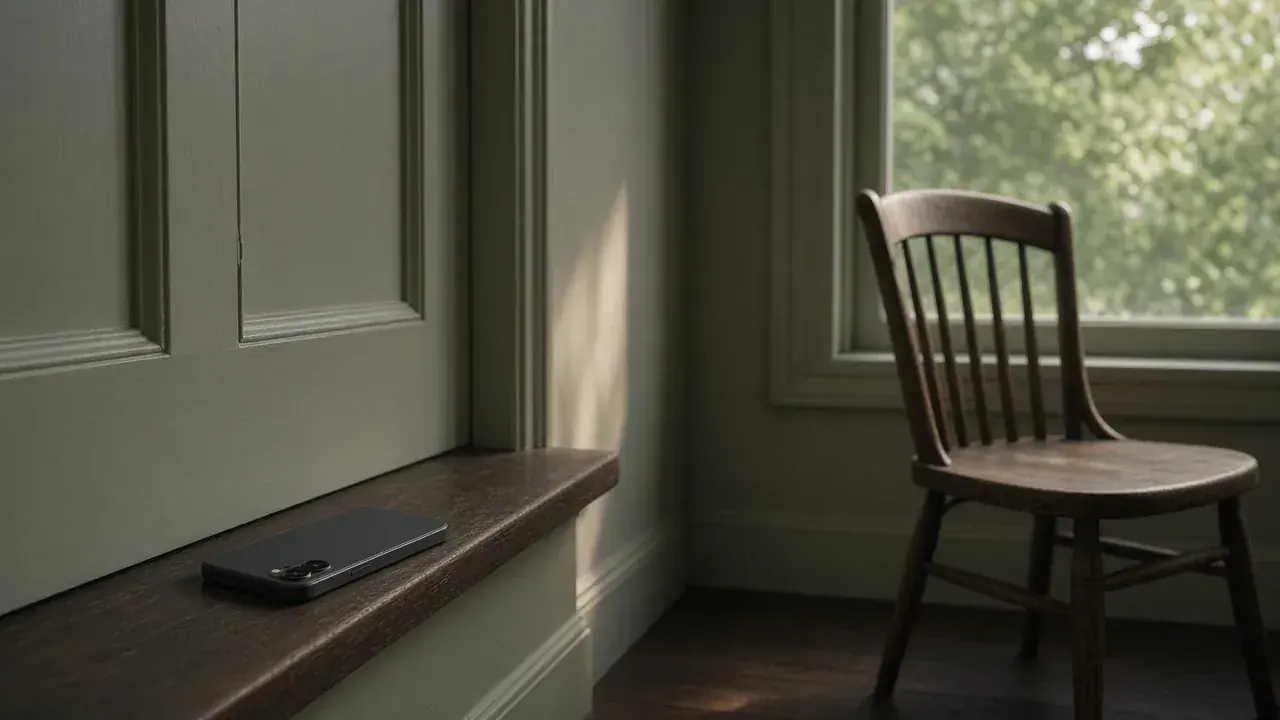
Choose one or two places where screens do not enter - the bedroom, the table, a chair by the window. Environments teach faster than intentions. A room that stays quiet becomes a teacher you do not have to argue with.
How to begin without drama
Do not announce a new identity as someone who “does digital detox”. Begin with one hinge for one week.
At the end of the week, ask:
- Where did attention feel wider?
- Where did anxiety rise - and was that useful information or withdrawal noise?
- What offline activity returned naturally: walking, conversation, reading, cooking, stillness?
Adjust. Keep what restores. Release what was only performance.
What this is not
It is not contempt for technology. Tools remain tools when you can put them down.
It is not a claim that offline living solves loneliness, grief, or clinical anxiety by itself. Presence helps. It does not replace care when care is needed.
It is not moral superiority. Many people are required to be reachable. Practise within the life you have, not the fantasy of an empty calendar.
The return of ordinary presence
When attention comes home, small things regain their size. A meal tastes like a meal. A walk is a walk. A conversation has a beginning and an end.
Balance is not found in escaping the digital world forever. It is found in remembering that you are allowed to be unavailable to the infinite, so you can be available to what is here.
Put the feed down on purpose. What returns is not nostalgia - it is your own attention, still usable.
Attention is not a productivity resource. It is how you meet your own life.
Continue with care - explore the three rivers, or write to mann@kalwadia.com.