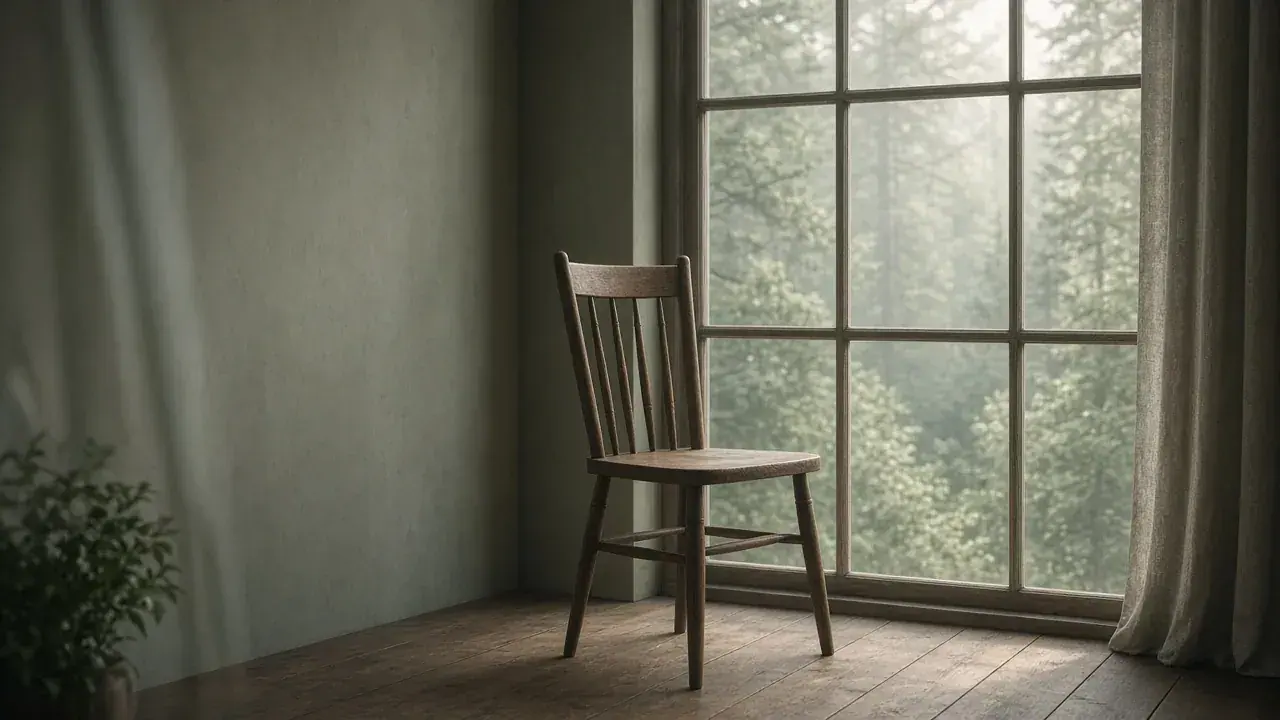
Chosen Solitude: The Practice of Inner Quiet
Some quiet restores you. Some quiet empties you.
The difference is rarely the number of hours alone. It is whether the time was chosen, whether it had a purpose, and whether a path back to belonging stayed open.
Chosen solitude is an inner practice. Loneliness is a signal that needed connection is missing. Balance asks us to honour both truths without confusing them.
Why solitude matters
A life lived entirely in company can still feel noisy inside. Attention never settles. The self becomes a set of responses. Insight has no room to arrive.
Brief, chosen time alone can lower the volume. The nervous system softens. Thought becomes less theatrical. You meet what you have been postponing - grief, gratitude, a decision, a simple breath.
This is not an argument for isolation. It is an argument for enough quiet that presence can return.
Three qualities of healthy solitude
1. It is chosen
You move toward reflection, rest, or meaningful work - not away from people because contact feels impossible. Choice keeps dignity in the quiet.
2. It has a purpose
The purpose can be small: walk without a podcast, sit with tea, write one honest page, pray, stretch, do a familiar chore with full attention. Aimless scrolling in an empty room is not solitude. It is distraction without witnesses.
3. It preserves connection
Healthy solitude leaves the door unlocked. You can still reply to one message. You can still keep a commitment. You can still ask for help. Quiet that slowly cuts every tie is no longer practice. It is withdrawal.
A simple weekly practice
Protect two short intervals this week - twenty to forty minutes each.
Before you begin, name the purpose in one line: rest, think, walk, pray, write.
During the interval, keep the phone in another room if you can. Let boredom visit without negotiating with it for the first ten minutes.
Afterwards, notice the aftermath:
- Do you return more able to meet people and work?
- Or more depleted, avoidant, and hard to reach?
The aftermath is information. Restorative solitude widens your range. Harmful isolation narrows it.
When alone time is not enough
If solitude repeatedly leaves you worse - heavier, more afraid, less able to make contact - treat that as a signal, not a failure of discipline. Grief, trauma, depression, and anxiety can intensify in silence. Seek support. Inner quiet is not a substitute for care, friendship, or clinical help when those are needed.
Protect a connection floor: one recurring check-in, one shared meal, one group or practice that keeps belonging alive. Solitude works best beside belonging, not instead of it.
What this practice refuses
It refuses the myth that strong people need no one. It refuses the opposite myth that every hour alone is unhealthy. Human beings need both contact and quiet in proportions that fit their life, culture, and season.
It also refuses turning solitude into content - filming the retreat, performing the silence. The point is to be with yourself, not to be seen being with yourself.
The quiet that returns you
When solitude is practised well, you come back slightly more yourself. Conversation has more room. Work has more honesty. Spiritual practice has less noise pretending to be depth.
Balance is not found by disappearing. It is found by learning the difference between loneliness and the sacred ordinary gift of being alone on purpose.
Choose solitude that restores you. Loneliness is accidental; quiet can be practised.
Solitude is not the absence of people. It is the presence of yourself without performance.
Continue with care - explore the three rivers, or write to mann@kalwadia.com.